What do “wax-based” and “oil-based” mean?
A colored pencil core contains pigment held together with binders, along with other ingredients that affect how it feels and wears. Wax and oil are two binder types. The names are useful shorthand, but they do not describe two completely separate recipes: pencils sold as oil-based may contain wax, and wax-based pencils may contain oils. Formulations vary among brands and even among product lines.
For a beginner, the more useful question is how a pencil behaves in your hand. Does it lay down color readily under light pressure? Can it hold a fine point? How many layers can you add before the paper stops accepting more color? A quick test on the paper you plan to use will answer those questions more reliably than the binder label.
How they tend to feel on paper
Many wax-forward pencils feel soft and deposit color quickly. That can make them inviting for broad shading and smooth-looking coverage. A softer core may also wear down faster, need sharpening more often and fill the texture of the paper sooner. Once the surface is heavily covered, adding a different color can become difficult.
Many oil-forward pencils feel firmer and keep a point longer, which can help with fine lines, small shapes and gradual layers. Some require a little more patience to build strong color. These are tendencies, not rules: a soft oil-based pencil and a firm wax-based pencil can overlap in performance. Pressure, pigment, core formulation and paper texture all affect the result.
Layering, blending and wax bloom
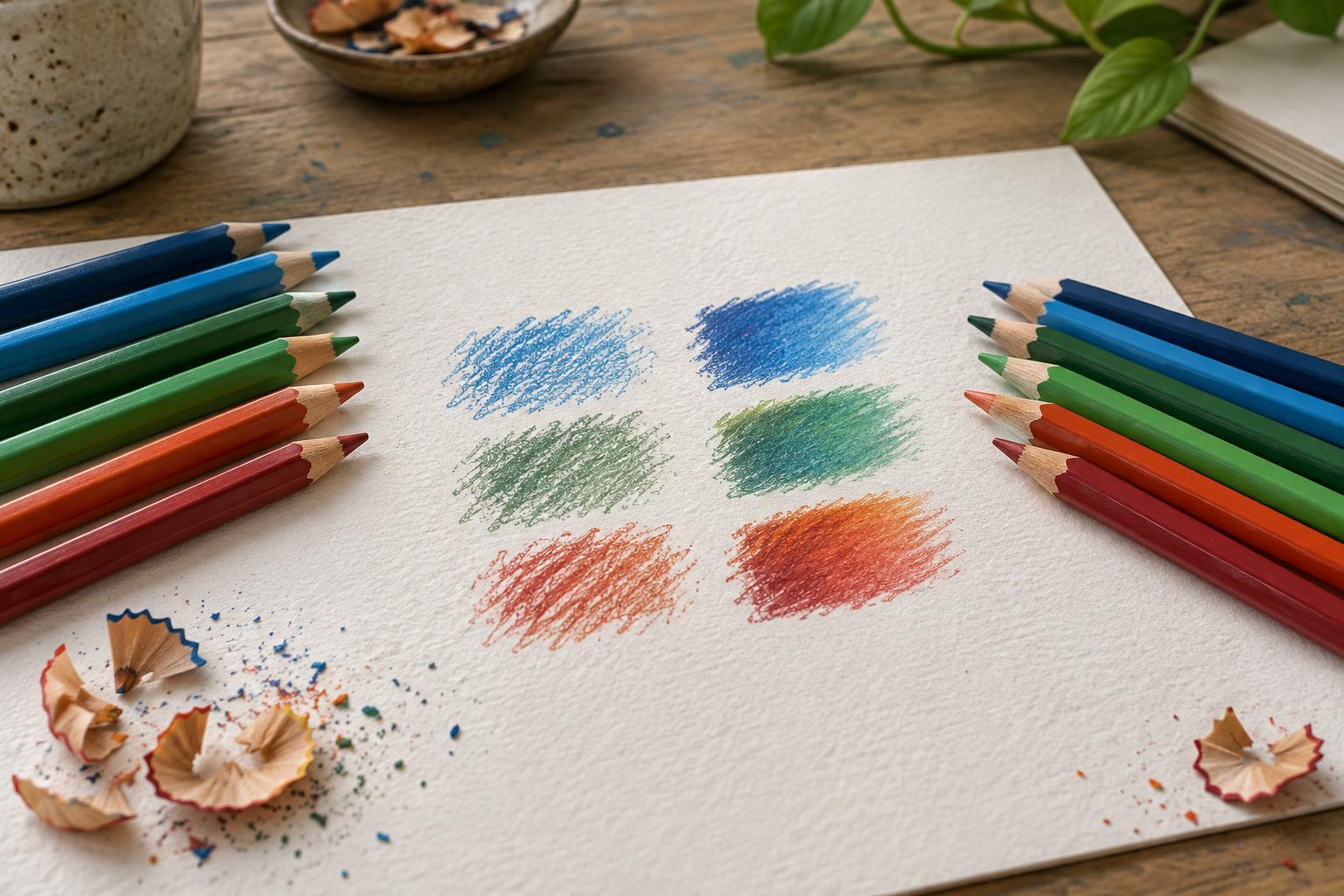
With either type, start with light pressure if you want to mix colors. Put down one thin layer, add another color over it, and repeat until the passage looks right. Heavy pressure early on can flatten the paper’s tooth—the small surface texture that catches pigment—and leave less room for later layers. A scrap-paper color chart is a useful way to discover which combinations produce the greens, browns or shadows you want.
Wax-based pencils can sometimes develop a pale, cloudy film over dark or heavily applied areas. This is often called wax bloom. It is not a reason to avoid them, and it may not appear in every drawing. If you notice it, gently buff a test area with a clean, soft cloth and see whether that restores the color. Keep the finished work protected from rubbing; if you consider a fixative, test it on a separate sample first because sprays can change the appearance of the drawing.
Blending does not require a special liquid. Layering colors, using a lighter pencil or applying a colorless blender can all change the surface, though a blender may make it harder to add more pigment afterward. If you experiment with solvents, follow the product’s safety directions and check that your paper can tolerate them.
Paper and lightfastness matter, too
A moderately textured drawing paper gives pencil pigment places to settle while still allowing controlled marks. Very smooth paper can be pleasant for detail but may accept fewer layers; rough paper can show more of its texture through the color. Try the same small sketch on two papers before deciding that a set of pencils is too soft, too faint or hard to blend.
Binder type does not tell you whether a color will resist fading. If you plan to display or keep a drawing for a long time, look for the maker’s lightfastness information for individual colors, where available. Protecting finished work from strong light and handling is sensible regardless of which pencils you choose.
Choosing a first set
Choose for the marks you enjoy making rather than for a supposedly superior binder. If you like quick, generous color and broad shading, try a few softer pencils. If you prefer fine details and patient layering, sample some firmer ones. A small selection of colors you will use often can teach you more than a large set you have not tested.
When possible, buy a few individual pencils and draw the same simple subject with each: an area of flat color, a graded shadow and a sharp edge. Note how they sharpen, how much pressure feels comfortable and whether they layer well on your chosen paper. You can also mix pencil types in one drawing. Understanding their behavior gives you more freedom than committing to one label.