What makes a pastel soft or hard?
Soft and hard pastels are both dry drawing materials made with pigment and other ingredients formed into sticks. Their labels describe how the sticks feel and deposit color, not how light or dark the colors are. Formulas vary by maker, but soft pastels generally release color more readily, while hard pastels tend to hold a firmer edge and wear down more slowly. Neither is the better choice for every drawing.
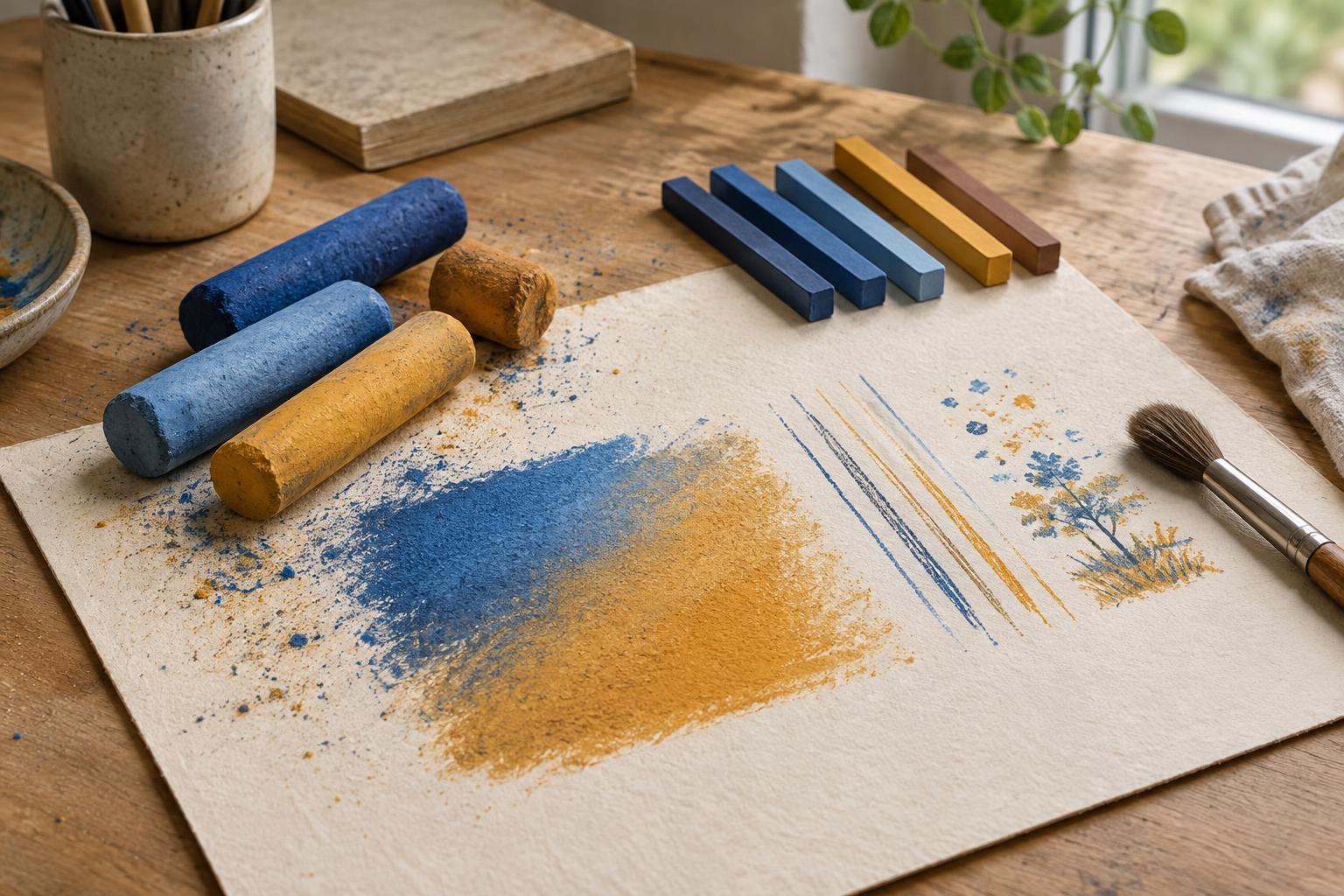
The difference is easiest to feel on a scrap of textured paper. Draw a line with each stick using similar pressure, then turn the sticks on their sides. A soft pastel will often leave a fuller, more powdery mark; a hard pastel will usually make a narrower, more controlled one. Color, paper texture and pressure also affect the result, so compare the particular sticks you plan to use rather than relying only on their labels.
Coverage: filling an area without fighting the paper
For broad passages of color, soft pastels are often the quicker tool. The side of a stick can cover a large area, and its loose deposit can be spread or blended with another color. This makes soft pastels useful for skies, backgrounds and other areas where you want an immediate sense of color. The trade-off is that a heavy application can fill the paper’s texture, leaving less grip for later layers.
Hard pastels usually lay down a thinner deposit. Covering a large area with the tip can take time and may produce visible strokes, but that restraint is helpful when building a drawing gradually. Try a light hard-pastel layer to establish color and shapes, then add softer pastel where you want fuller coverage. Use only as much pressure as needed: pressing hard can flatten the paper’s texture and make further color harder to apply.
Detail: edges, small shapes and finishing marks
Hard pastels are useful for outlines, small shapes and directional marks because their corners and points last longer. They can help you place a building edge, suggest individual grasses or adjust a contour without depositing a thick patch of color. A soft pastel can also make a sharp mark with a fresh corner, but that corner may wear down quickly.
Detail does not have to mean drawing every part with a fine point. A few carefully placed marks often read clearly against broader passages. If you plan to combine both types, begin with light hard-pastel marks and bring in soft pastels as the drawing develops. Returning to a fine line over a thick soft-pastel layer may be difficult because the paper has less texture left to hold it. Test your sequence on a spare piece of the same paper before committing to an important area.
Dust: why it appears and how to manage it
Both types can shed loose particles, especially when you use a textured surface, apply strong pressure or add many layers. Soft pastels often produce more visible loose dust because they release material so easily, though the amount depends on the stick and your technique. Dust is part of the medium’s behavior, not a sign that you are using it incorrectly.
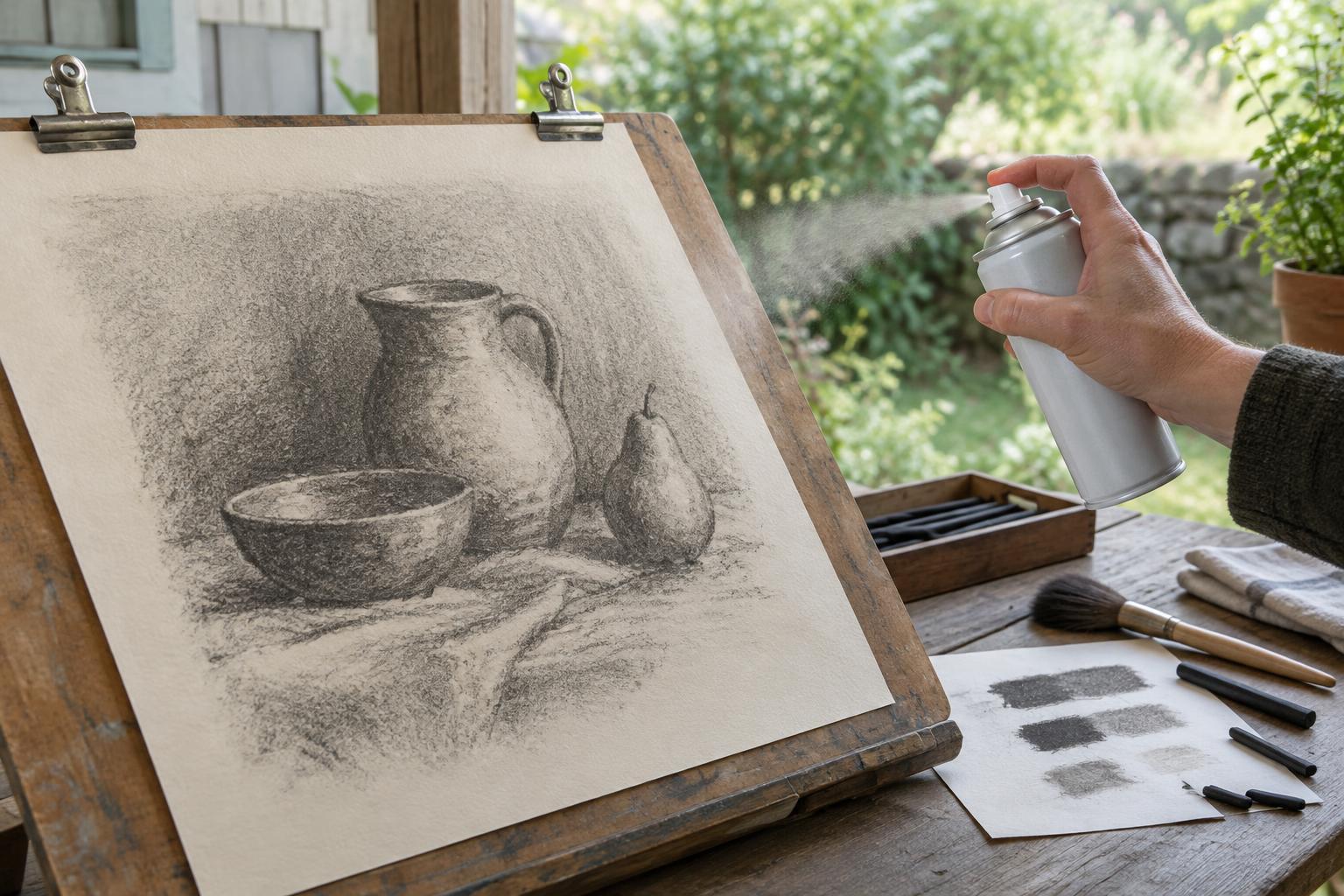
Work where you can clean the surface easily, and keep food and drink away from the drawing area. Avoid blowing dust off the paper, which sends particles into the air. Instead, tilt the sheet gently to let loose material fall onto a protected surface, then clean the area with a damp cloth. Wash your hands after working and check the maker’s safety information, particularly if children will use the materials. If you choose to use a spray fixative, follow its label directions and test it first: it may change the appearance of colors.
Choosing a useful first set
If you are deciding between the two, start with the marks you most want to make. Choose soft pastels if generous color and broad, expressive passages appeal to you. Choose hard pastels if you prefer a slower approach with more control over lines and light layers. A small selection of each gives you room to experiment without requiring a large collection.
Paper matters as much as the sticks. A surface with some texture can catch and hold pastel; a very smooth sheet may accept fewer layers. Try the same colors on two papers and notice how much pressure you need, how easily the colors overlap and when the surface stops taking new marks. Those tests will tell you more about your working preferences than the word “soft” or “hard” on a box.