What the two labels mean
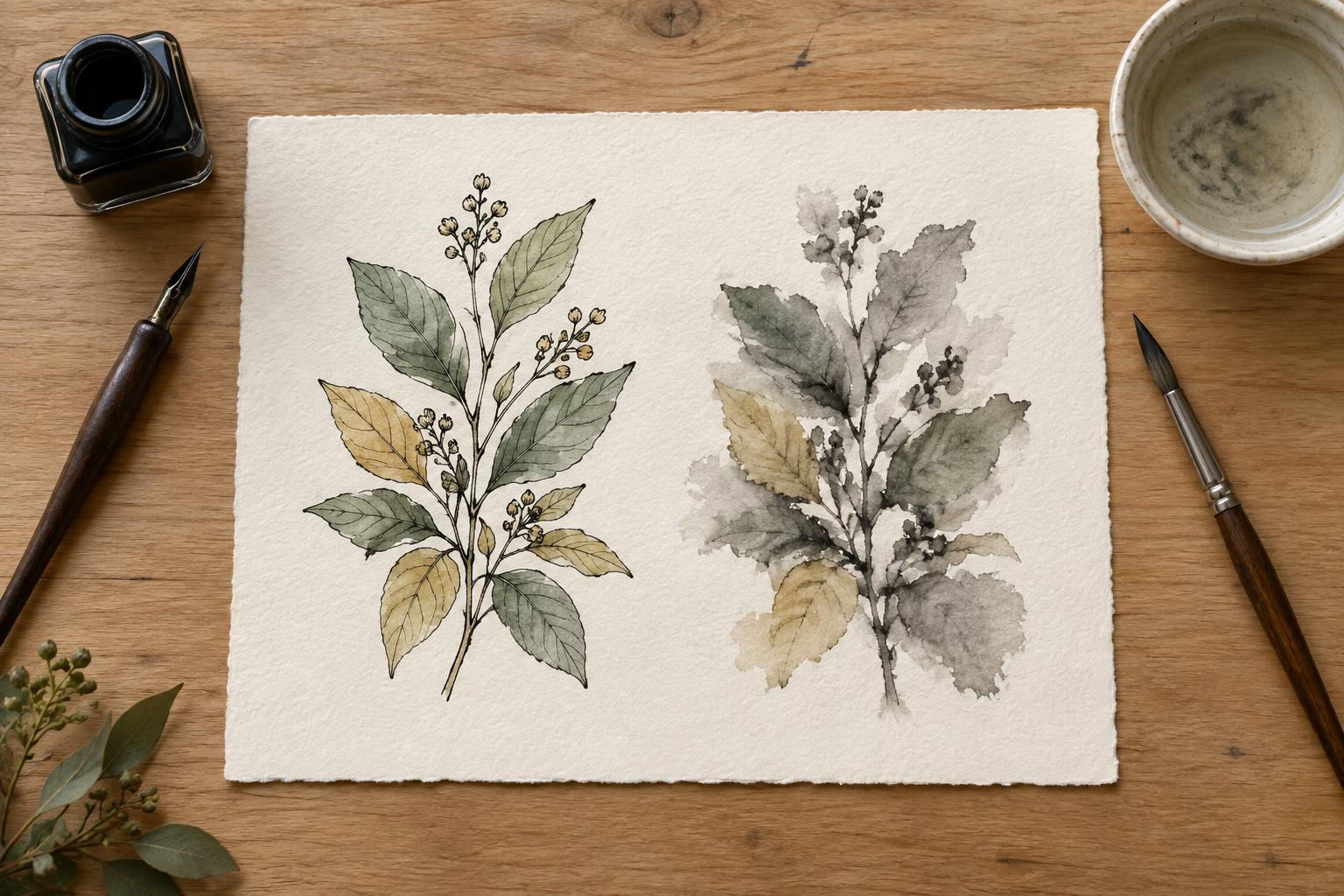
The difference between waterproof and water-soluble drawing ink matters most when you add water after making a mark. A waterproof ink is intended to resist being moved by water once it has dried or cured. That makes it useful for outlines that must remain clear beneath watercolor, diluted ink or a wet brush. Water-soluble ink can be reactivated with water, allowing a line to spread, soften or become the starting point for a wash.
Neither label tells you everything about an ink. Some inks are water-based while wet but become water-resistant when dry. Pigment and dye describe types of colorant, not a dependable shortcut for predicting waterproofness. Products may also differ in how long they need to dry and how well they resist rubbing. Read the label for the intended use, then test the actual ink, tool and paper you plan to combine.
Choose waterproof ink when the line must hold
Waterproof ink suits drawings built in layers. You might sketch a building in fine lines, let the ink dry, then brush a pale wash across its walls without deliberately blurring the architecture. It also helps when dark contours need to stay distinct from lighter areas of tone. If you want both crisp edges and loose color, drawing first with waterproof ink gives you more control over where the wash travels.
Allow plenty of drying time before adding water. A line that feels dry on the surface may still lift, particularly if it was laid down heavily or the paper is slow to absorb it. Brush gently on the first pass rather than scrubbing over the marks. Waterproofness can vary across ink formulas, and even a resistant line may smear if the paper surface is disturbed.
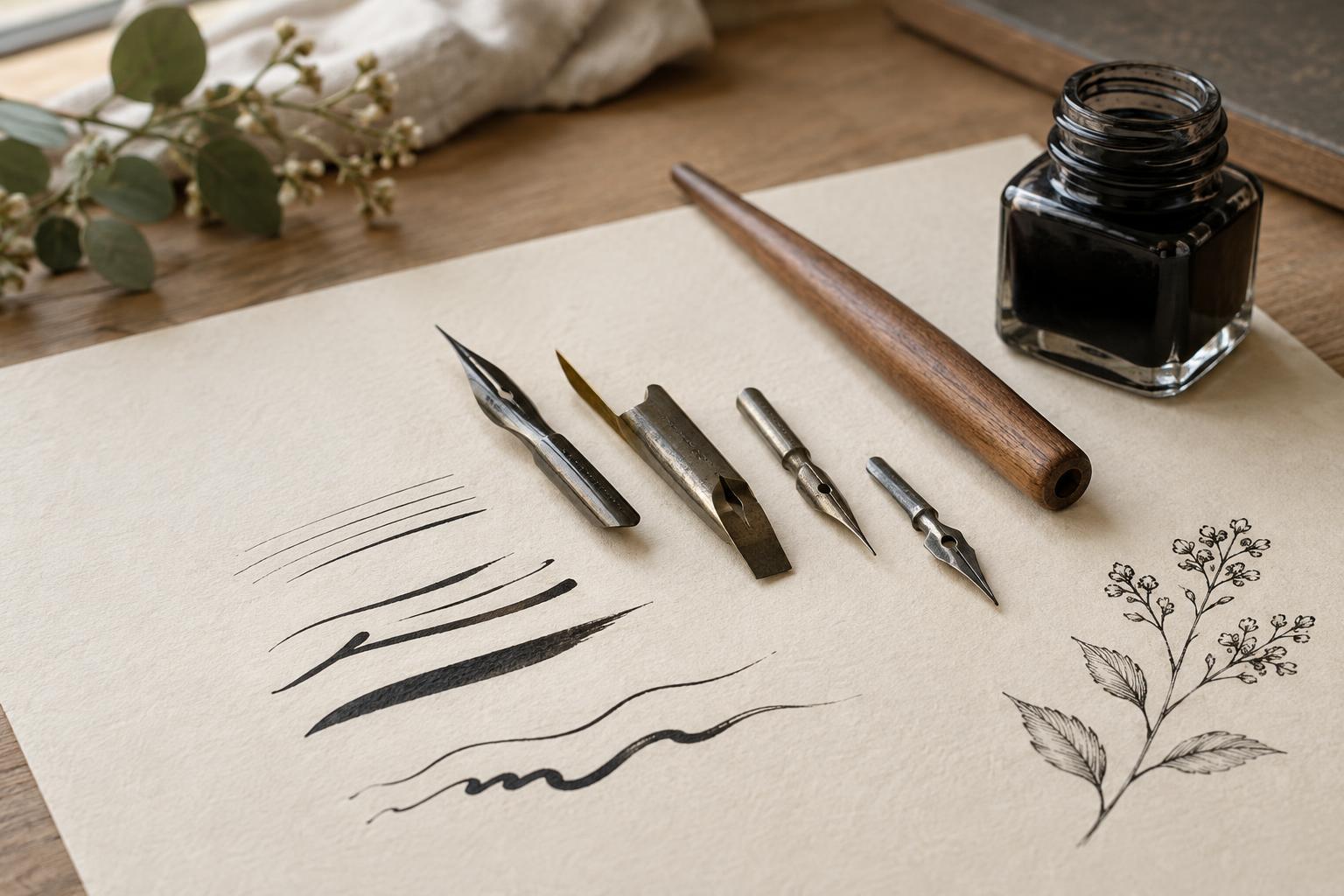
Check tool compatibility as carefully as water resistance. Some drawing inks work well with dip pens and brushes but are not intended for fountain pens, where they may be difficult to clean out. If you use a technical pen or refillable pen, choose an ink explicitly suitable for that tool and follow its cleaning guidance.
Choose water-soluble ink when the line can become tone
Water-soluble ink invites a more fluid approach. Draw a line, then touch one edge with a damp brush to draw color into a shadow. A few strokes can provide both the structure and shading of a quick sketch. Varying the amount of water changes the effect: a nearly dry brush may soften an edge, while a wetter brush can carry ink farther across the page.
This behavior is especially useful for studies in which you want to respond to marks as they move. It is less convenient when you need to paint cleanly over completed linework: a new wet layer may darken a pale wash or pull an outline into it. Work from light effects toward stronger ones, and leave areas untouched where you want a sharp line to remain. You can also let one wash dry before deciding whether to rework it, remembering that water may lift it again.
Test the color after dilution, not just straight from the pen or bottle. Some inks change character when spread thinly, revealing undertones that are hard to see in a dense line. That variation can be a welcome part of the drawing, but it is easier to use deliberately once you know what to expect.
Paper and water change the result
Ink choice is only part of the decision. Smooth paper can support precise nib work, but a generous wash may buckle a lightweight sheet. More textured paper may accept water better yet interrupt a very fine line. On absorbent paper, ink can feather into the fibers before you even reach for a brush; on a less absorbent surface, a heavy mark may take longer to dry.
Match the paper to the wettest stage of your planned drawing. For mostly dry linework with a few damp touches, a sturdy drawing paper may be enough. For repeated washes, choose a paper intended to handle wet media. Try your usual pen or brush on a spare corner: note how sharply the ink dries, whether it bleeds through, and how the surface responds to a second pass of water.
Make a small comparison before committing
A simple swatch reveals more than a label. On your chosen paper, draw several lines with each ink and make one area of heavier shading. After the marks have dried thoroughly, pass a damp brush across half of each sample. Look for smearing, lifted color, feathered edges and changes to the paper. Then try a lighter second wash over the same area.
Use the result to choose by intention rather than by a rule that one ink is better. Pick waterproof ink when a wash should sit around or over an established line. Pick water-soluble ink when pulling tone out of the line is part of the drawing. If you want both effects, keep separate tools for each ink and test their order on a scrap sheet. A few minutes of comparison makes the final drawing feel more like a choice and less like a surprise.