What changes from one charcoal to another?
Charcoal is a versatile drawing material, but not every stick behaves the same way. Vine and willow charcoal are made by heating pieces of their respective woods with limited oxygen. They are usually sold as slender, relatively soft sticks. Compressed charcoal is made from charcoal powder formed into a stick, typically with a binder. Its formulation varies by maker, so two compressed sticks can feel quite different.
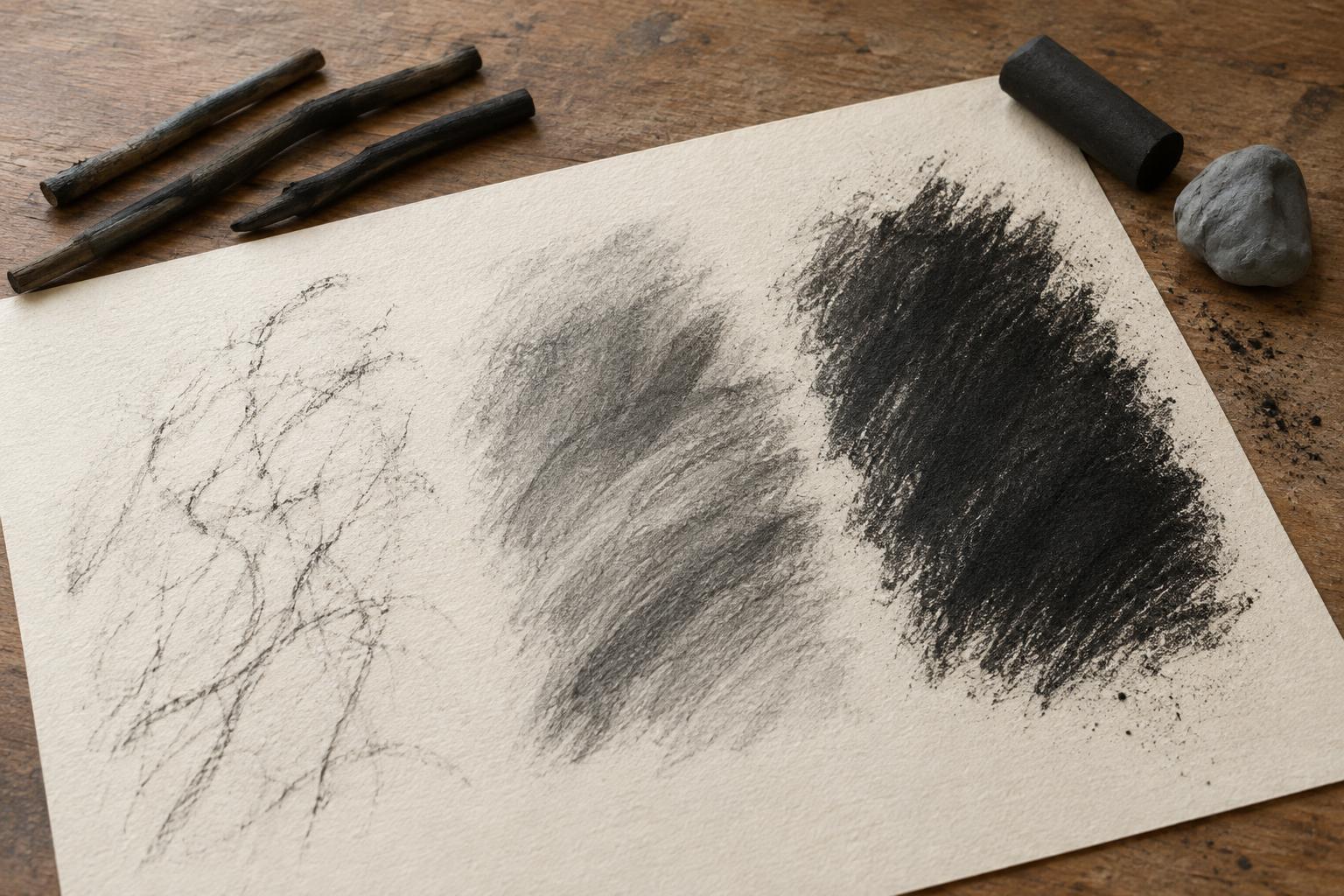
The most useful distinction is how readily each type deposits material and how firmly that material stays put. Vine and willow are well suited to tentative lines, broad tonal studies and revisions. Compressed charcoal more readily builds strong, dark passages, but those marks can be harder to remove. None of the three is inherently the “best” charcoal: the choice depends on the stage of the drawing and the kind of mark you want.
Vine charcoal: a light touch for working things out
Vine charcoal often lays down a soft, relatively pale gray mark. It responds well to changes in pressure, from faint guide lines to fuller areas of tone, though it generally takes more work to reach a deep black than compressed charcoal. On a lightly textured paper, its marks can be swept across the surface with the side of the stick or placed more precisely with a broken edge.
Because vine charcoal tends to sit loosely on the paper, it is useful for an initial composition. You can lift a line with a kneaded eraser, soften it with a cloth or redraw it elsewhere without immediately filling the sheet with stubborn marks. That flexibility has a trade-off: a sleeve or resting hand can smudge an area you meant to keep. Work from one part of the page toward another, or keep a clean sheet under your drawing hand.
Willow charcoal: similar freedom, a different feel
Willow charcoal shares many of vine charcoal’s strengths: it is easy to move, blend and lift compared with most compressed charcoal. Depending on the stick, it may feel a little smoother or make a slightly different range of grays. Diameter and hardness often matter as much as the wood named on the packet. A thin stick encourages quick lines; a thicker one lets you cover a broad shape without repeatedly going over it.
Rather than expecting a dramatic difference from the label alone, try vine and willow side by side on the paper you plan to use. Make three marks with each: a light line, a firm line and a patch rubbed with the side of the stick. Then lift part of each mark with the same eraser. This small test reveals which stick gives you the control and degree of reversibility you prefer.
Compressed charcoal: stronger darks, firmer decisions
Compressed charcoal usually deposits more pigment-like material in a single stroke, making it helpful for dark accents, bold outlines and high-contrast drawings. It comes in different hardnesses and forms, including sticks and pencils. A harder compressed charcoal may hold a point for detail, while a softer one can lay down a rich tone quickly. Check the label where possible, but judge the stick by testing it: binder and hardness affect both its darkness and how it moves across the page.
Use compressed charcoal with some intention, especially early in a drawing. You may be able to lift a fresh mark, but erasing often leaves a gray trace, particularly if you have pressed the material into the paper’s texture. For a gradual build, start with vine or willow, establish the main shapes, then add compressed charcoal where the darkest values will help the drawing. This preserves room to change your mind before committing to contrast.
Let the paper help you choose
Paper texture, often called tooth, affects all three materials. A smoother sheet favors crisp lines but may accept fewer layers before charcoal begins to slide around. A more textured sheet catches loose charcoal and can support layered tones, though its grain may remain visible in a broad shaded area. Very heavy pressure can flatten the tooth and make later layers behave differently. Test a corner or spare sheet before starting a drawing you want to keep.
For a simple comparison, draw the same object three times on one type of paper: once with vine, once with willow and once with compressed charcoal. Give each sketch a light tone, a midtone and a dark accent, then try blending and lifting a small area. Keep the sheet where it will not be rubbed while you assess the results. If you use a spray fixative to reduce smudging, follow its label and work with appropriate ventilation; it may change how the surface looks. The samples will tell you more than a rule about which charcoal you ought to use.