What paper weight tells you
Paper weight describes how much a sheet weighs for a given area, not how thick or sturdy it will feel in every situation. Labels often use grams per square metre, abbreviated gsm. You may also see pounds, but pound ratings depend on the type and standard size of paper being measured, so they are not always straightforward to compare. If you are choosing between unfamiliar pads, gsm is usually the simpler reference point.
Weight is a useful clue about how a sheet will handle, but it is not a quality grade. Two papers with the same gsm can differ in stiffness, texture and resistance to erasing or water. Fibre, manufacturing method and surface treatment all matter. A light sheet can be an excellent place to draw, while a heavy sheet can still be poorly suited to a particular pencil or pen.
When lightweight paper makes sense
Lightweight paper is well suited to quick studies, gesture drawings, notes and repeated practice. A thinner sketchbook is easier to carry, and using many sheets can make experimentation feel less precious. For graphite, ballpoint, fineliner and other relatively dry marks, the lower weight may pose no problem. If you like to work from several attempts before making a finished drawing, light paper can serve as an efficient first stage.
Its limitations become clearer when you press hard, erase repeatedly, build dense layers or add moisture. A soft sheet may crease under your hand or show marks through to the reverse. Ink may also bleed through, depending on both the paper and the pen. Put a spare sheet behind the page when testing a new tool, and try a few marks and corrections before committing to a whole sketchbook.
When heavier paper earns its place
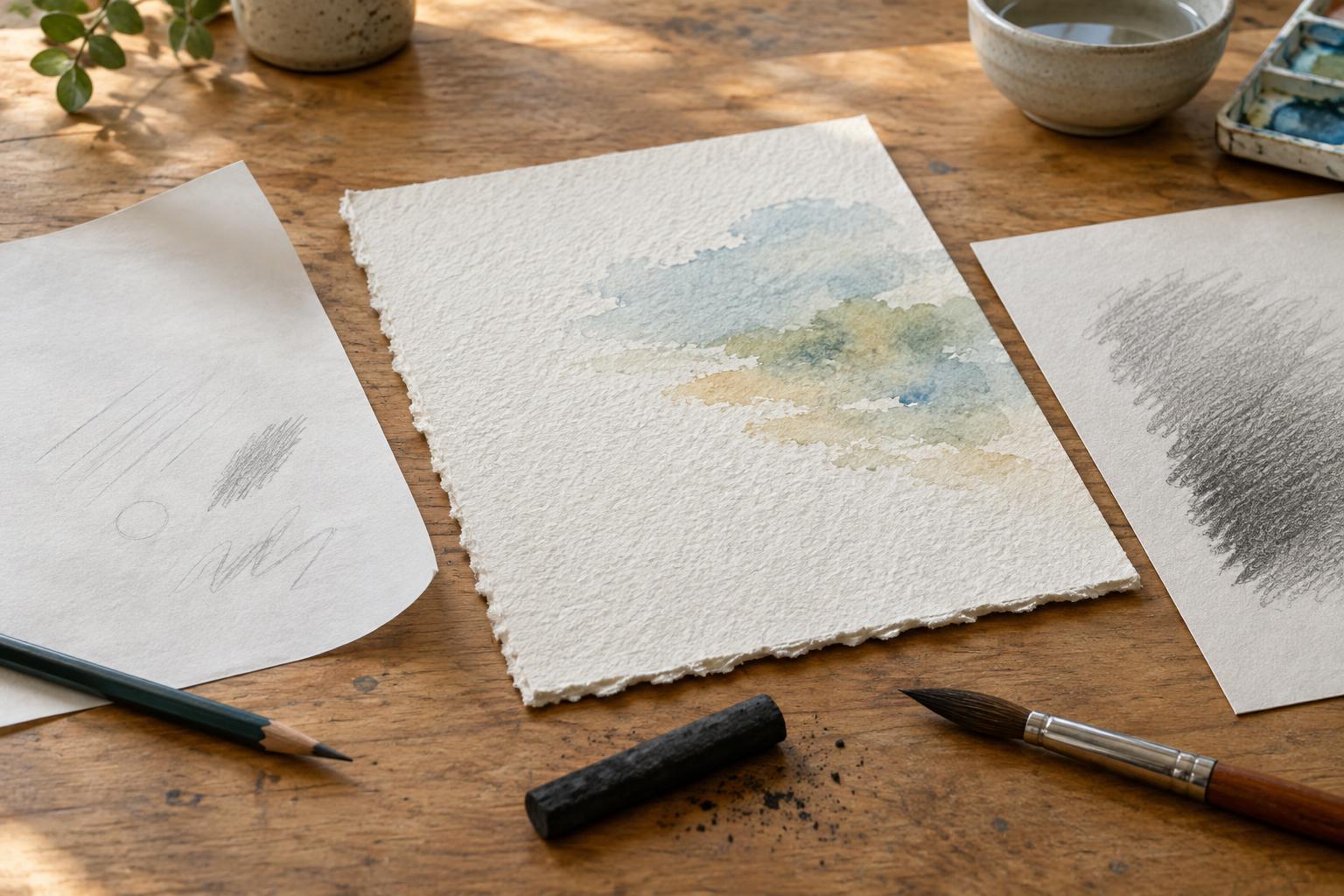
Heavier paper often feels more stable for a drawing you plan to handle, frame or work on over several sessions. It can be helpful when you use broad charcoal marks, vigorous erasing, layers of coloured pencil or light washes alongside dry media. Its extra body may reduce curling and make a loose sheet easier to move without accidental bends.
Heavy does not mean waterproof or immune to damage. A generous wash can still buckle a thick sheet, and aggressive erasing can disturb its surface. If water is central to the work, look for paper intended for wet media rather than relying on gsm alone. Conversely, a very heavy sheet may be unnecessary for delicate pen lines or small graphite studies. Choose it because its handling supports your process, not simply because its number is higher.
Look beyond the number on the label
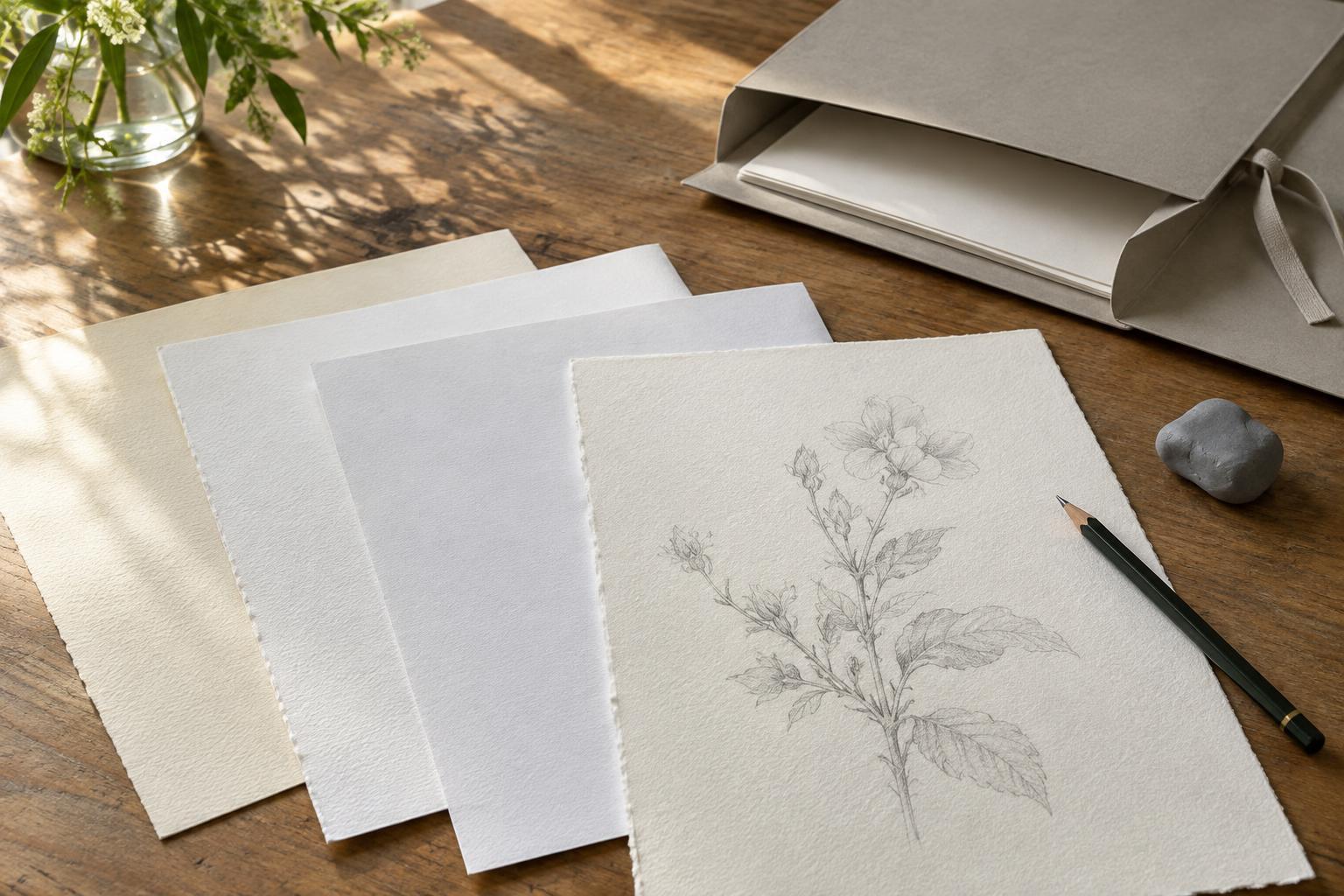
Surface texture changes the drawing experience as much as weight does. Smooth paper tends to favour crisp ink lines and fine graphite detail; a more textured surface catches charcoal, pastel and softer pencils differently. Neither surface is universally better. Think about whether you want an even line, visible grain or enough texture to hold successive layers of dry material.
Sizing, a treatment that affects how paper absorbs moisture, is another consideration. A sheet that takes ink cleanly may produce different results with a brush and water. If you hope to keep or display a drawing for a long time, consider how the paper is described by its maker and how you will store it. Weight alone cannot tell you how a work will age.
A simple way to choose
Start with the marks you actually make. For a portable pencil sketchbook, choose a paper that feels comfortable to turn and offers enough resistance for your eraser. For layered dry-media drawings, try a sturdier sheet with a surface that accepts repeated marks. For ink washes or mixed media, test a paper made to tolerate moisture. These are starting points rather than fixed rules.
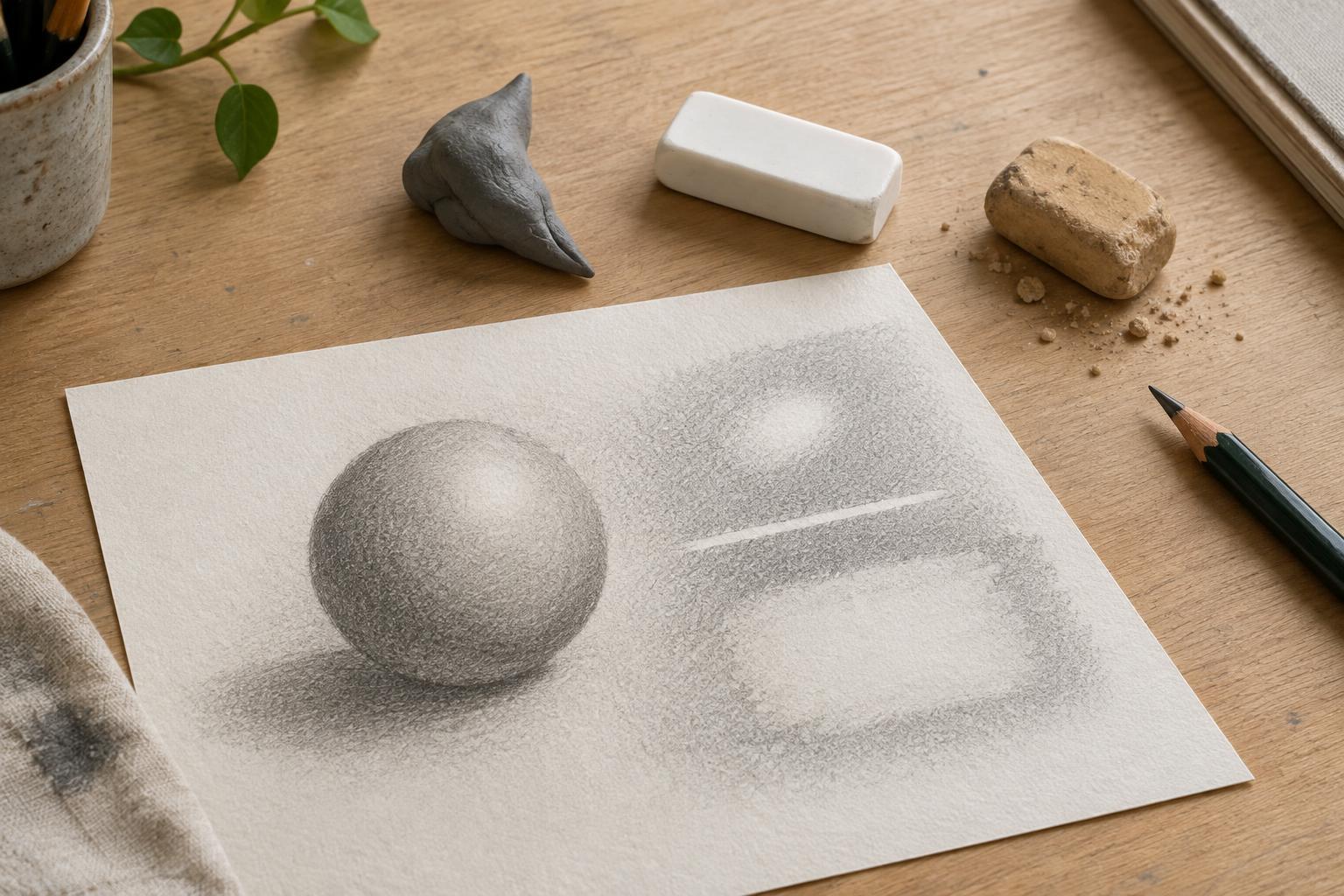
If possible, buy a few individual sheets or a small pad before investing in a large supply. On each paper, draw a dark area, erase a patch, add your usual pen or brush marks and check the back after it dries. Notice not just whether the sheet survives, but whether you enjoy drawing on it. The right weight is the one that gives your chosen tools enough support without adding cost or bulk you do not need.