What blending tools actually do
A blending tool moves dry pigment across the surface of a drawing. It can soften the boundary between two values, spread a dark mark into a lighter area or lift some material from one place and deposit it in another. That last effect is easy to overlook: a tool that looks clean may still carry enough graphite or charcoal to darken a highlight.
Blending is most useful when it serves a specific purpose, such as rounding the shadow on a simple form or making a distant edge less prominent. It is not a required finishing step. Pencil hatching, visible charcoal marks and the grain of the paper can all be part of a drawing’s character. Before smoothing an area, ask whether those marks are helping to describe the subject.
Paper stumps and tortillons: similar shapes, different handling
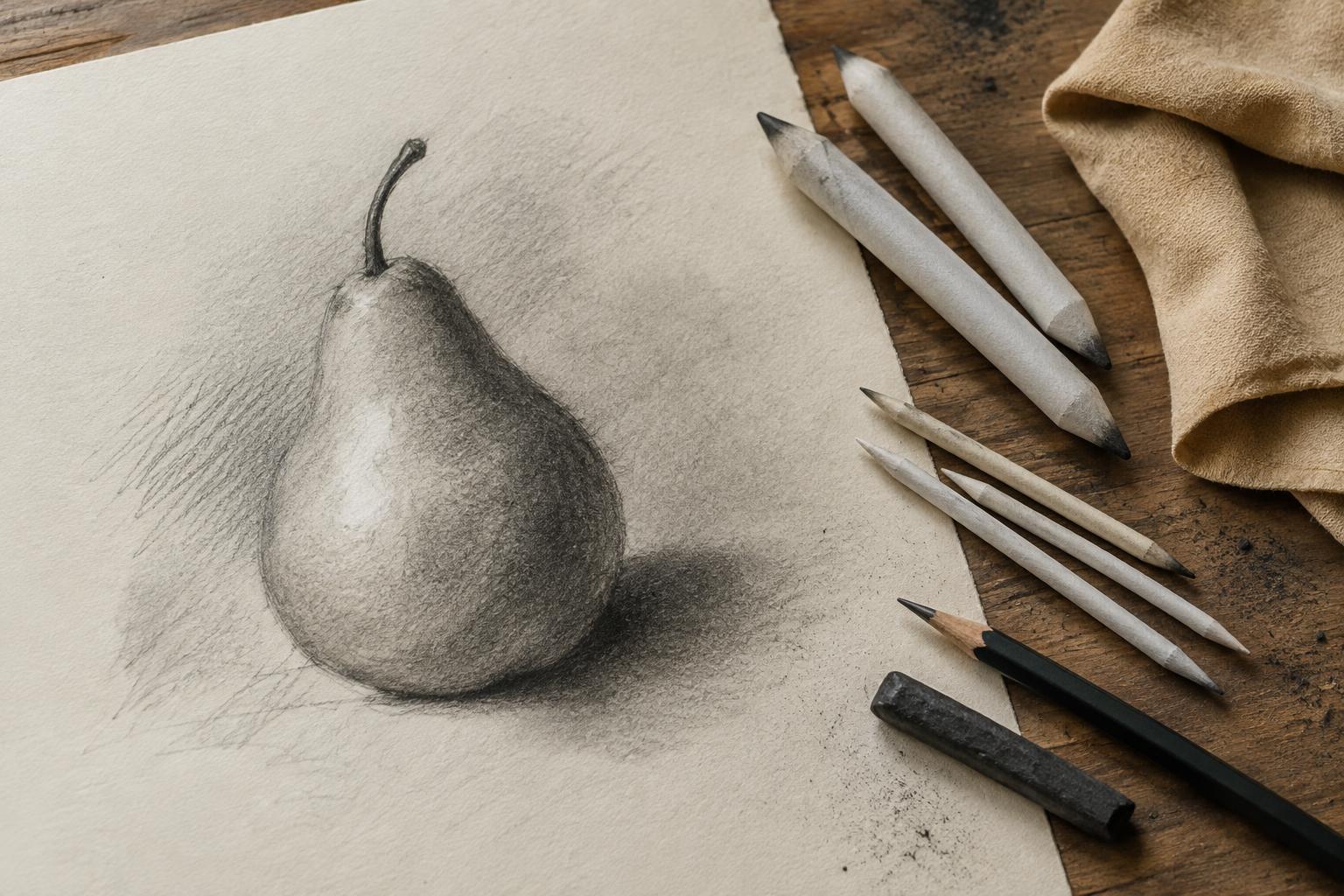
A blending stump is usually a firm, tightly compressed roll of paper with a point at one or both ends. Its density makes it useful for controlled work: a small transition on a cheek, the curve of a shaded object or a narrow edge beside a highlight. Use the side of the tip for a broader passage and the point for a more precise one. A hard point can still leave a visible stroke, so build the effect gradually.
A tortillon is generally made from rolled paper and is often lighter or less densely packed, sometimes with a hollow end. It can feel more flexible than a stump and may suit quick, delicate adjustments. Names and construction vary between makers, so judge a tool by its firmness and the marks it makes rather than its label alone. Keep several sizes if you work at different scales, and reserve a clean tool for pale areas.
Chamois for broad, gentle passages
Chamois is a soft piece of leather used to move or lift dry media over a larger area. Folded around a finger, it can soften a charcoal background, reduce a patch that has become too dark or create a broad midtone before more detailed drawing begins. Its pliable surface follows the paper differently from a pointed paper tool, making it better suited to sweeping changes than tiny contours.
Start with a light touch. A chamois can remove more material than expected, particularly from a loose layer of charcoal. Test it on a margin or spare sheet before using it near a finished passage. Soft cloth may offer a different, useful effect if you prefer not to use leather, but try the substitute first: fabric texture and absorbency can change the result.
Match the tool to the medium and paper
Graphite can be spread into smooth tones with a stump, but repeated rubbing may compress the paper surface and make later layers harder to control. If an area turns shiny or dull and flat, stop blending and consider rebuilding its values with pencil marks instead. A tool used on a dark graphite passage may also carry a gray cast into nearby light areas.
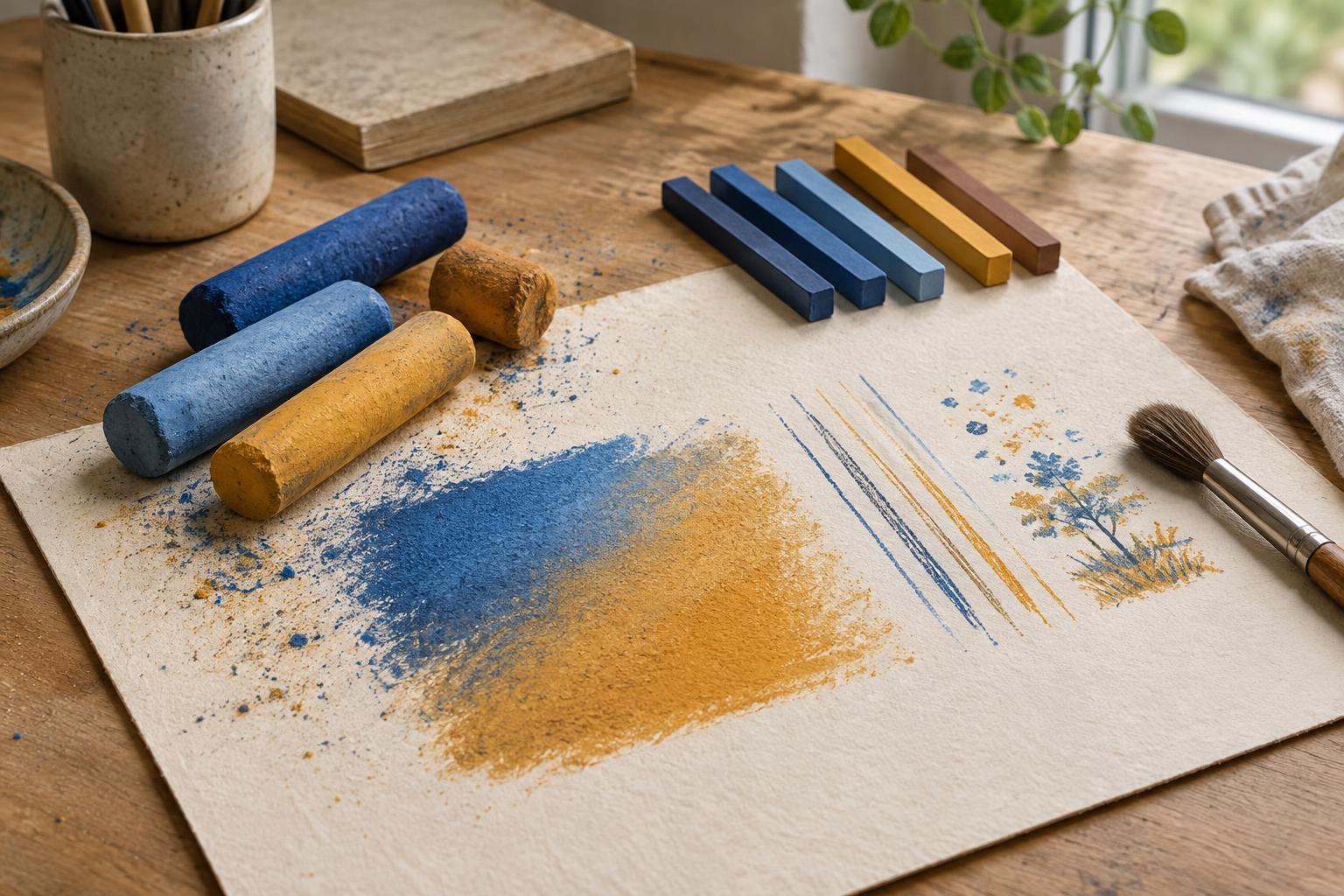
Charcoal moves readily, which makes both stumps and chamois effective. It also means a broad swipe can erase a useful edge. Pastel calls for particular restraint: blending can push color into the paper’s texture, but too much pressure may fill that texture and leave less room for another layer. On smooth paper, dry media may have less grip; on textured paper, a stump may catch the raised surface while leaving pigment in its recesses. A small test on the same paper is more reliable than expecting one technique to work everywhere.
A simple method for cleaner blends
Lay down less material than you think you need, then move from the lighter value toward the darker one with short, gentle strokes. This helps keep the light area from becoming contaminated too quickly. Rotate a stump or tortillon to find a cleaner side, and fold a chamois to expose a fresh surface. Work in stages, comparing the blended passage with the rest of the drawing after each one.
When a paper tip becomes dark or blunt, rub it gently on a sanding block or spare scrap of paper to expose a cleaner surface. Do this away from the drawing and avoid stirring up dust. A kneaded eraser can restore small highlights or soften a transition that has gone too far. Keep tools used for graphite, charcoal and different pastel colors separate when possible. The aim is not a perfectly uniform surface, but enough control to choose which edges stay crisp and which ones quietly disappear.