Why paper labels need a closer look
Drawing paper does more than hold marks. Its surface affects how a pencil moves, how ink settles and how much erasing it can tolerate. Its fibers and other ingredients also influence how it may change over time. That makes labels such as “acid-free” and “archival” useful starting points—but not complete descriptions of a sheet.
For a sketchbook used to explore ideas, surface feel and price may matter most. For a drawing you hope to frame or keep for years, it is worth asking a few more questions. What is the paper made from? Does the maker describe its permanence? And will the finished drawing be stored with materials that help protect it?
What “acid-free” tells you—and what it does not
Paper acidity is commonly expressed as pH. “Acid-free” generally means that the paper is not acidic when assessed by a particular test. This matters because acids can contribute to the breakdown of paper fibers, leaving a sheet weaker and more prone to discoloration. It does not mean the paper can never become acidic: materials touching it, pollutants and conditions of storage can affect it later.
The label also says little on its own about fiber quality. Paper made from well-processed wood pulp can be a sound choice, while cotton content alone does not guarantee that every other ingredient or manufacturing step supports longevity. Lignin, a component associated with wood, can contribute to discoloration and deterioration when present in significant amounts. If long-term preservation matters, look for more detail than “acid-free,” such as a statement about lignin content or a named permanence specification.
Some acid-free papers are buffered with an alkaline reserve, often added to help counter acids that may develop or enter the sheet. Others are unbuffered. Neither choice is universally best: the drawing medium, any attached materials and the intended use all matter. If you are planning a mixed-media work or mounting a drawing, check the paper and mounting-material recommendations for the materials you intend to use.
What “archival” usually promises
“Archival” generally signals that a paper is intended to last well under suitable conditions. Unlike a precise list of ingredients, though, the word alone does not tell you which properties were tested or which criteria were met. Two products described as archival may differ in fiber composition, surface coating, buffering and resistance to light or handling.
A more informative product description may identify the fiber source, state whether the paper is buffered, mention lignin, or cite a specific permanence standard. Those details give you something to compare. If a pad says only “archival,” treat that as a prompt to read the specification rather than as a guarantee that the finished artwork will remain unchanged. Graphite, ink, charcoal, fixative and the way a drawing is displayed each have their own effects on how it ages.
Choose for the marks you want to make
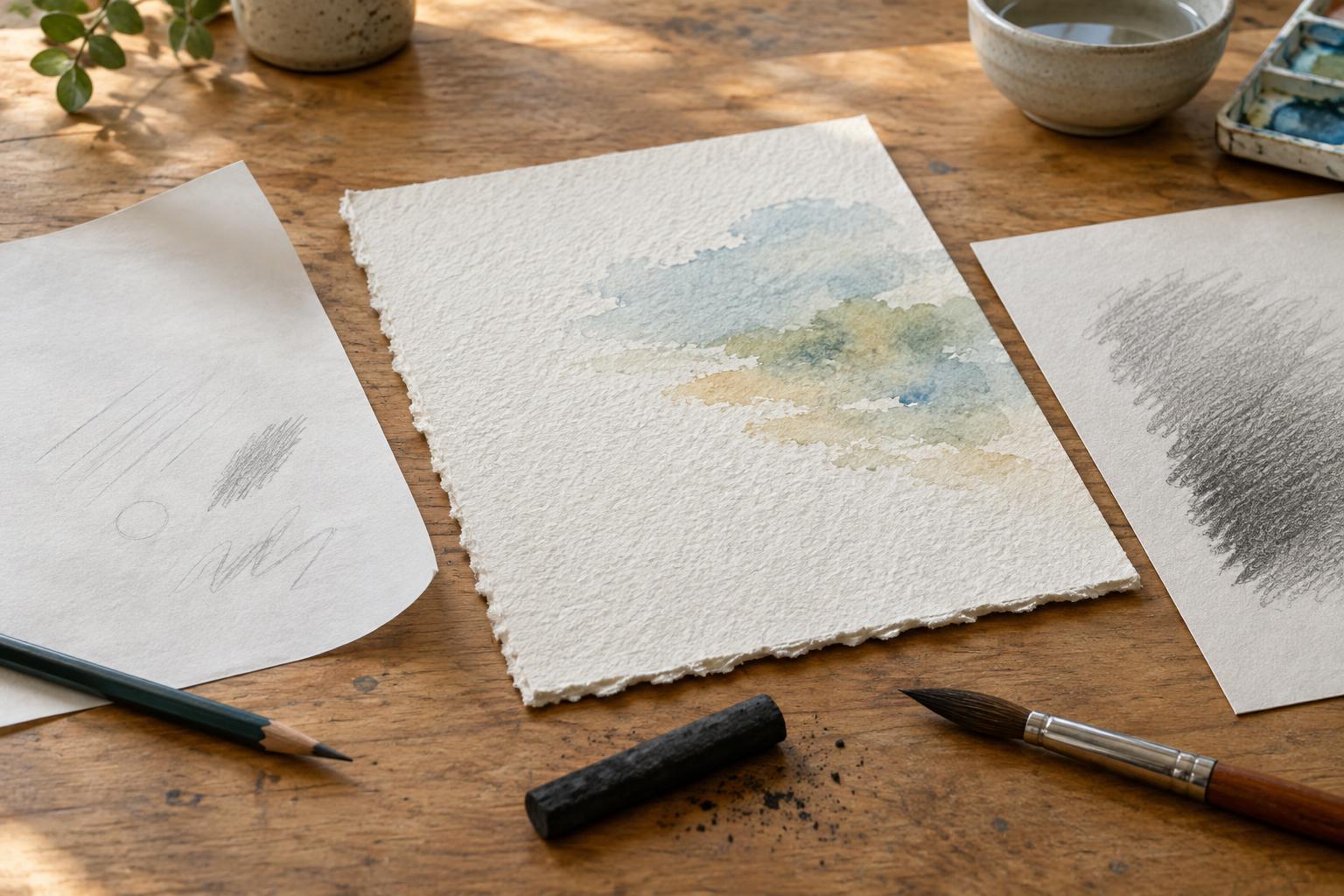
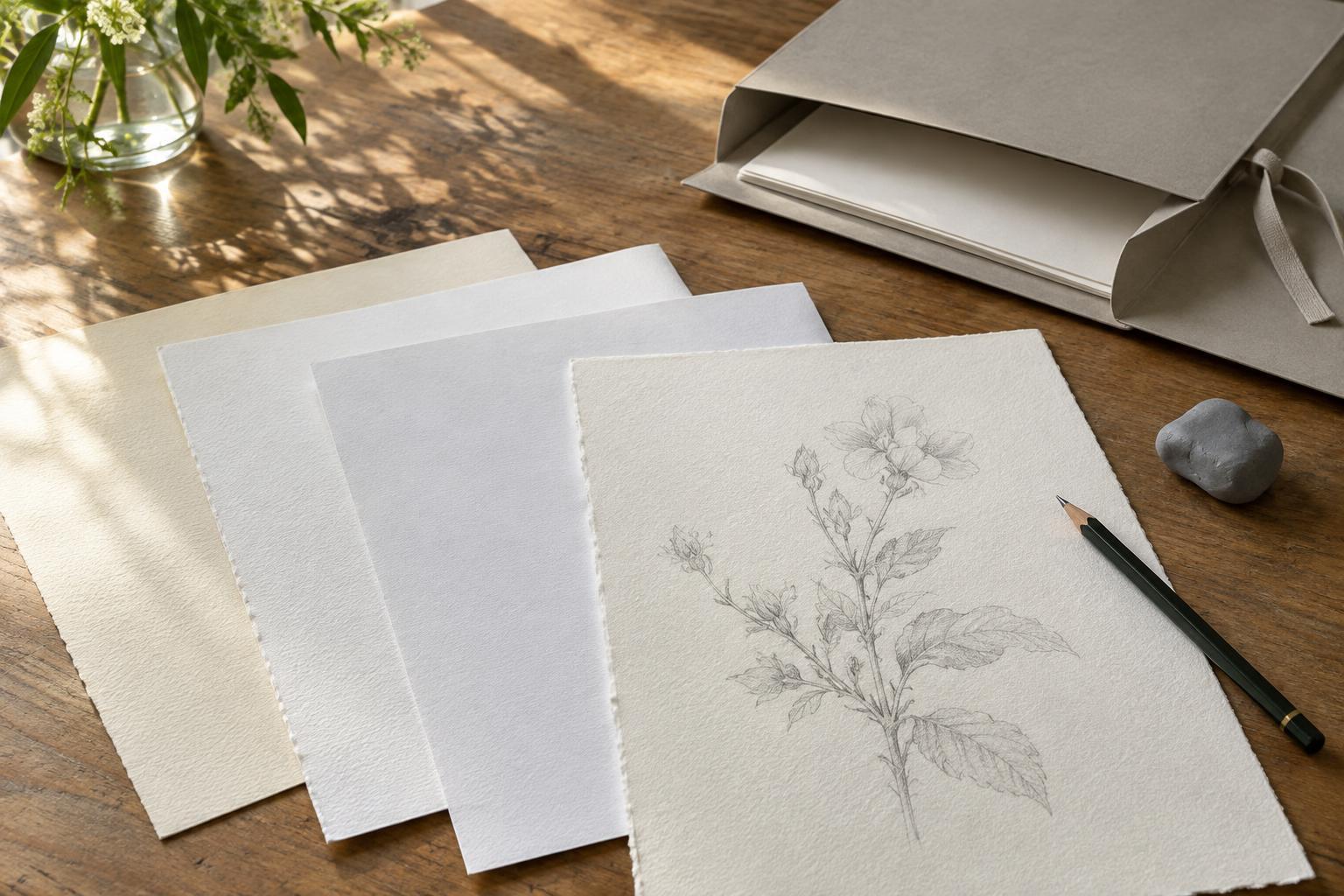
Preservation is only one part of choosing drawing paper. A smooth surface supports fine pen lines and detailed graphite work, while a more textured sheet can catch dry media such as charcoal or pastel. Heavier paper may cope better with repeated erasing or modest wet applications, but weight by itself does not tell you how a surface will perform. Sizing and surface treatment also affect absorbency and how a sheet responds to water or ink.
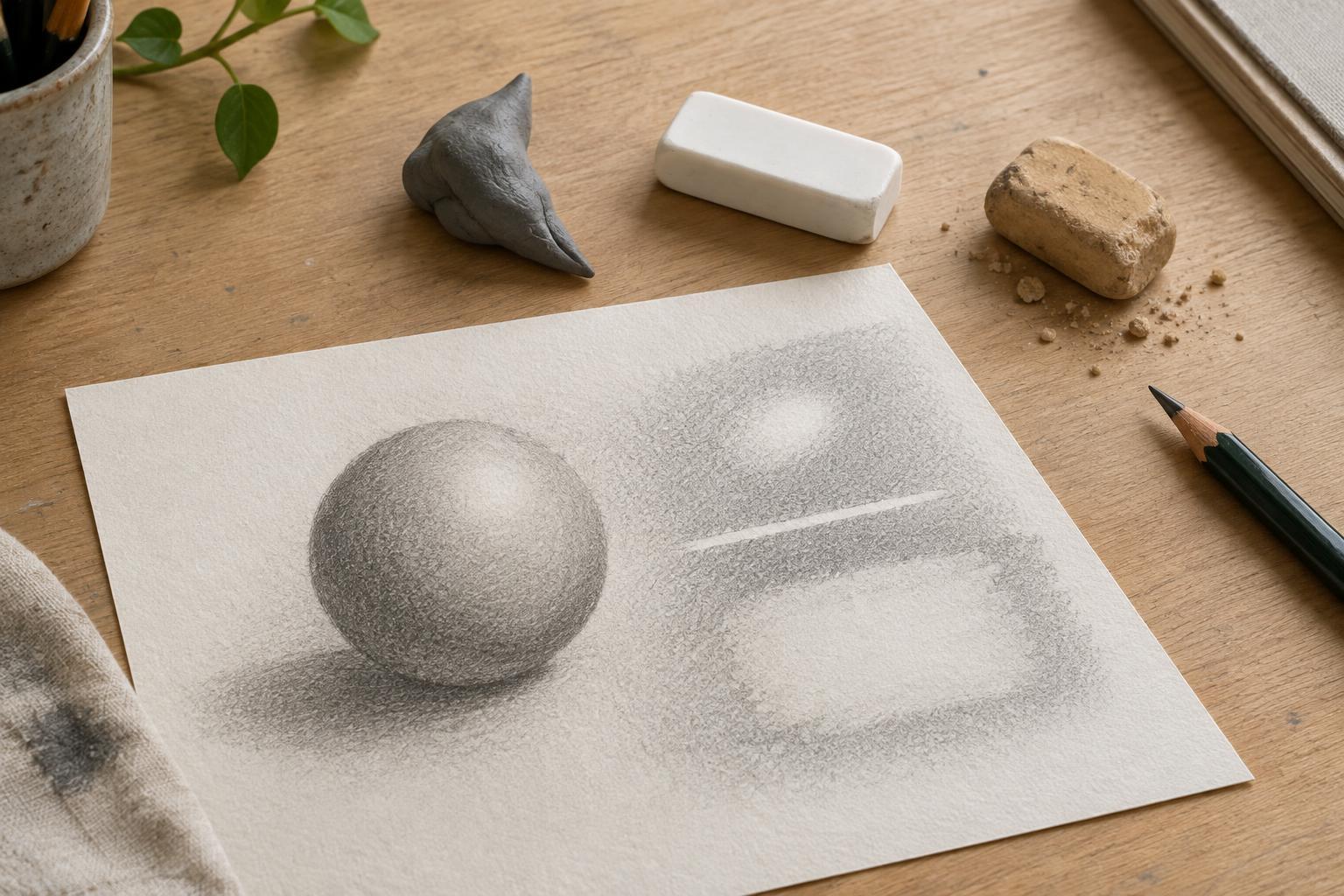
If possible, test a single sheet or a small pad before committing to a large pack. Make the kinds of marks you actually use, erase a section, layer your medium and check the reverse for bleed-through. For a finished work, compare the paper’s handling qualities with its material specifications. The best choice is one that supports both the drawing process and the care you expect to give the result.
Give good paper a good environment
Even a carefully chosen sheet benefits from sensible storage. Keep drawings clean, supported and away from prolonged direct light, dampness and abrupt changes in conditions. Avoid leaving a valued drawing against an ordinary cardboard backing or an unknown adhesive for years. If you frame it, consider materials intended for works on paper and allow the drawing to sit clear of the glazing.
No label can promise permanence on its own. “Acid-free” answers a limited question about acidity; “archival” expresses an intention that is most useful when backed by specifics. Read beyond the front of the pad, test how the sheet behaves with your medium and think about storage as part of the material choice.